1966 – Tokagakudo Music Hall – Kenji Imai

The Tokagakudo building is a music hall designed by architect Kenji Imai. The building is an octagon; the shape of its figures clematis petals and every outer wall of the octagon is covered with patterns of large flying birds an nature symbols as sun, moon or stars made in mosaic. The architecture is contradictory to the Metabolist-movement at the time of its completition in the 60s.


Name: Tokagakudo Music Hall│Type: Concert Hall│Architect: Kenji Imai│Completed: 1966

Location

1961 – Tokyo Metropolitan Festival Hall – Kunio Maekawa

The Tokyo Metropolitan Festival Hall, built in Ueno Park by Kunio Maekawa (1905 – 86) in 1961, responds in almost every possible way to Le Corbusier, for whom Maekawa had worked from 1928 to 1930. In its variety of features and finishes not only does it recall Chandigarh, La Tourette and even Ronchamp, it also adresses Le Corbusier’s own National Museum of Western Art (1959) across the road. The large building contains two auditoria, the smaller one square, with the stage placed in one corner and the seating on the diagonal, and the larger one, the concert hall, with a horeshoe-plan and galleries reaching around the side.


Name: Tokyo Metropolitan Festival Hall│Type: Concert Hall│Architect: Kunio Maekawa│Completed: 1961

Location

1970 – Embassy of Kuwait – Kenzo Tange

The project consists of two distinct parts: the ambassador’s residence and the chancellery. Since the building program has these two distinct spaces, one chooses to place them according to their private or public appearance. Thus, on the first floors of the chancery building it is located while on top residence and dining room is located, clearly turned towards the courtyard as they would the typical Arab houses, giving privacy to the rooms. Despite this provision and space division, both have a common entrance.

The program centers around two vertical communication is distributed. On the ground floor is the entrance courtyard and lobby. From these one can go to the residence and access your waiting room or to access their respective embassy and waiting room. The basement is divided into two spaces at different heights containing the garage and the engine room. As one moves into the building first space is dedicated to the Foreign Ministry and then own the house of the ambassador.


Name: Embassy of Kuwait│Type: Governmental│Architect: Kenzo Tange│Completed: 1970

Location

1969 – Yasuyo Building – Nobumichi Akashi

This unusual, narrow commercial building resembling a stack of twisted bolts stands right next to the eastern entrance of Shinjuku Station and is famous for Kakiden, a long-established restaurant which occupies the 6th to the 9th floors and has interiors designed by Yoshiro Taniguchi. Kokin Salons is on the 6th floor, Yasuyo Hall on the 7th, and there are more guestrooms with Western-style tables and chairs on the floor above. The building’s top floor is furnished in the traditional Japanese style: two of the three rooms are 12 and 10 tatami in size, while the third is of more intimate proportions. Part of the kaiseki restaurant on the basement floor is an art gallery. Architect Nobumichi Akashi described his design for this building as anchored solely in the fast pace of Tokyo and in the present moment.


Name: Yasuyo Building│Type: Commercial│Architect: Nobumichi Akashi│Completed: 1969

Location


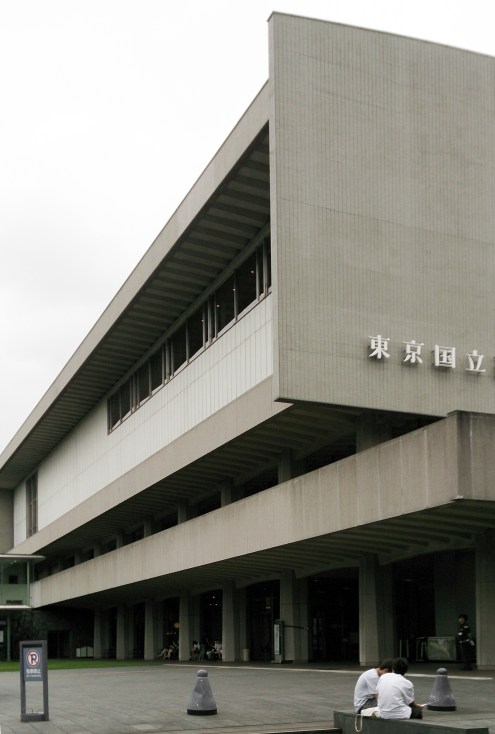
1969 – National Museum of Modern Art – Yoshiro Taniguchi

DSC_1014

The Museum, just a few steps from the Palace Side Building, faces the moat and stone rampart of the Imperial Palace compound across the road. This close proximity promoted Yoshiro Taniguchi to make the design as simple as possible. The horizontal volume is elevated above a raised platform with only a few windows. Inside, however, the spaces are richly articulated follwing a skip-floor system.


Name: National Museum of Modern Art│Type: Museum│Architect: Yoshiro Taniguchi│Completed: 1969

Location

1967 – Shizuoka Tower – Kenzo Tange

Built in the Ginza district, the Shizuoka Tower gave Tange a chance to materialize his Metabolist ideals, which called for a new urban typology that could self perpetuate in an organic, vernacular, “metabolic” manner. The narrow, 189 square-meter, triangular site inspired Tange to design a vertical structure, consisting of a main infrastructural core, which could develop into an urban megastructure, into which an ever-growing number of prefabricated capsules could be “plugged-in.”

The infrastructural core was a 7.7 meter diameter cylinder, reaching a height of 57 meters, containing stairs, two elevators, and a kitchen and sanitary facilities on each floor. The core served as an access shaft to the modular office units: cantilever glass and steel boxes of 3.5 meters which punctuated the main core on alternating sides. A total of thirteen individual offices were arranged in five groups of two or three modules connected asymmetrically to the central beam. Balconies formed in the gaps between the clusters, allowing for future units to potentially be “plugged-in,” an idea which never materialized. The structure today has the same amount of units as when first erected in 1967, and so Tange’s Metabolist vision for a perpetually regenerating, prefabricated urban megastructure was never fulfilled.


Name: Shizuoka Tower│Type: Office│Architect: Kenzo Tange│Completed: 1967

Location

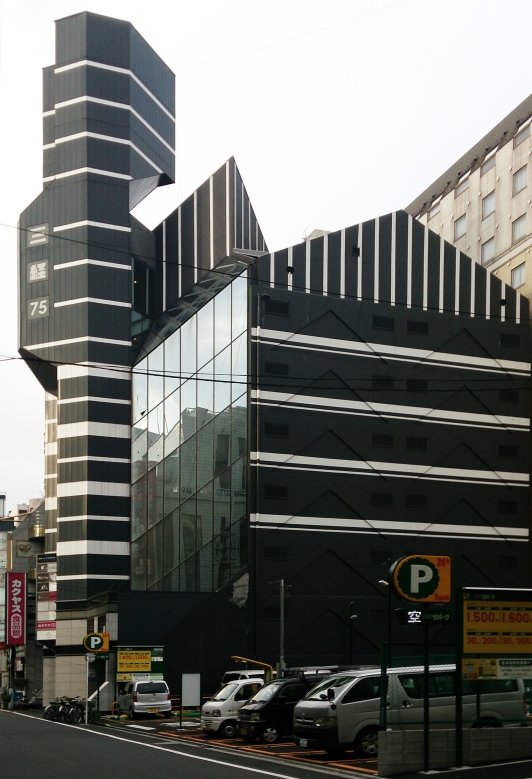
1969 – Ichiban-kan – Minoru Takeyama

1969 - Ichiban-kan - Minoru Takeyama


In the late 60s, architect Minoru Takeyama designed this reinforced concrete volume, shaped with an unusually dynamic, although still abstract geometry and formative black-white painting. The iconographic building reflects the festive and superficial charactre of its urban context.


Name: Ichiban-kan│Type: Entertainment│Architect: Minoru Takeyama│Completed: 1969

Location

1959 – Kamikozawa House – Kenji Hirose

The Karnikozawa house was built in 1959, when Japan was just starting its successful climb from devastation during the war to its current prosperity. The Kamikozawas lived in a modest wooden house at that time, but wanted to own a home that reflected their ideals and optimism. When they saw the work of architect Kenji Hirose in a magazine, they knew that they had found the architect for their dream house. Hirose has been a pioneer in the modern Japanese construction industry and is well known for having designed the first series of buildings in Japan using light gauge steel structures.

His original proposal was far above the budget set by Toshihiro Karnikozawa, who was only 32 years old at that time. However, both husband and wife worked with their architect — who was just a bit older — till they agreed on the plans, and completed a house that was quite radical for its time. Although built with Western materials and techniques, this one-storied, rectangular concrete box house has a calm sense of space reminiscent of traditional Japanese homes. Today, the house is transformed to a restaurant. The exterior, facade and concrete structure are still in good condition, while the interior changed strongly.


Name: Kamikozawa House│Type: Residential│Architect: Kenji Hirose│Completed: 1959

Location

1937 – Keio Gijuku Yochisha Elementary School – Yoshiro Taniguchi

After becoming an Associate Professor at the Tokyo Institute of Technology in 1932, architect Yoshiro Taniguchi designed the Yochisha Main Building of Kejo School in 1937. A masterpiece of modern architecture from the early Showa period, it remains an important work representative of Taniguchi’s early career. He subsequently led the building of other school buildings and hospital wards and even designed the Monument to the Birthplace of Keio Gijuku, which stands in Akashi-cho, Chuo-ku, where Keio was originally founded. The building is registered as one of the 100 best representatives of modern architecture in Japan. Note: The school is not open to the public, visit only with application possible.


Name: Keio Gijuku Yochisha Elementary School│Type: Education│Architect: Yoshiro Taniguchi│Completed: 1937

Location

1954 – Saint Anselm’s Meguro Church – Antonin Raymond

At St. Anselm’s Meguro Church, architect Antonin Raymond explored the potential of folded-plate construction. The church and adjoining kindergarten, built for a Benedictine priory, face west, away from the Yamanote line. The structure consits of nine pairs of hollow, folded-plate columns of exposed concrete and beams of similar construction. Light enters trough the slits between the columns.


Name: Saint Anselm’s Meguro Church│Type: Church│Architect: Antonin Raymond│Completed: 1954

Location