1990 – Watari-Um – Mario Botta

Designed by Swiss architect Mario Botta and opened in September 1990, the Watari Museum of Contemporary Art (Watari-um) cuts a striking profile on the edge of Harajuku and Gaienmae. The abbreviated ‘Watari-um’ derives from the combination of ‘Watari,’ the family name of the founders, and ‘Museum.’

The building takes advantage of the specific geometry offered by a triangular plot at the intersection of a mayor thoroughfare and a secondary side street. The confluence of the two façades is emphasised by the cut-out silhouette of the emergency stairway which projects up ahead the main façade with a curving skin, and also by the entrance to the building, an outstanding presence at grade level. The long incision which runs down through the middle of the façade to conclude at the base with a large rectangular display window is the only reference here to the internal organization of the building, which is articulated over six floors. The ground floor and basement are occupied by a bookshop; on the first, second and third floor are the exhibition rooms of the art gallery, while the top floors accommodate the offices and the owner’s residence.

From the urban and architectural point of view, and using the words of Mario Botta, the building “emerges as a Romanesque church in the midst of the great confusion and the diversity that surrounds it”


Name: Watari-Um │Type: Museum│Architect: Mario Botta│Completed: 1990

Location
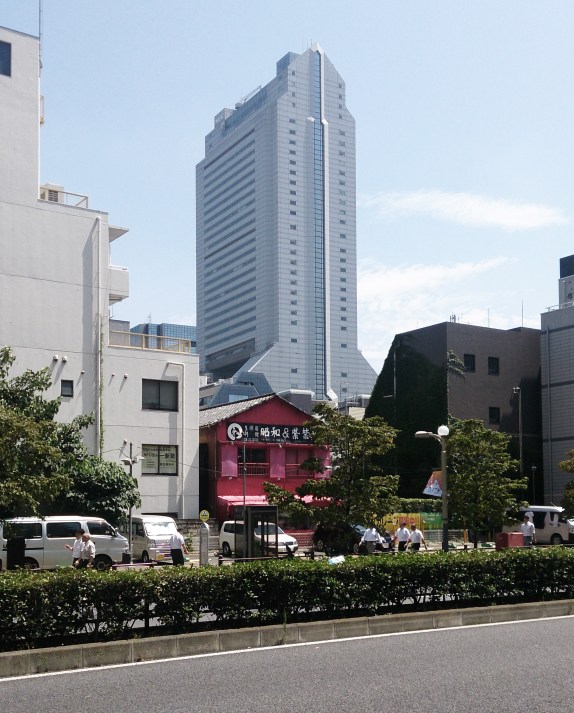
1990 – NEC Super Tower – Nikken Sekkei

1990 - NEC Super Tower - Nikken Sekkei

The 43-story head office is the first of what Nikken calls its “third generation” high-rise buildings, wherein design cosiderations include a substantial concern for the enviroment. In these Nikken buildings such concerns significantly shape the structural system an the overall form. Housing the headquarters of the well-known Japanese electronics giant, the building, as it soars upward, becomes narrower by two setbacks. The resulting shape ensures longer hours of sunshine to the surrounding area.

The designers also took advantage of the relatively generous site and surrounded the building with a “forest” of planted trees and greenery. Moreover, recognizing that high-rise structures create considerable wind turbulence at street level, the architects designed a large urban window: the building is pierced by a 42 meter wide and 15 meter high opening above the twelfth floor, after which the structure narrows. This solution could only be achieved with a large-span structural system. The super frame, applying box-like super columns and truss beams at every tenth level, concentrates the vertical load of the structure at its two shorter sides, wherein the vertical circulation, elevators and stairways, is also arranged.

This structural system, along with de “urban window”, allowed for the inclusion of a large atrium within the lower section of the building: this 45 meter high and 30 meter square atrium is outfitted with a same-size, crystalline skylight. In good weather teh skylight can be rolled away, opening the space below, which is protected in case of rain by the upper section.


Name: NEC Super Tower │Type: Commercial / Office│Architect: Nikken Sekkei │Completed: 1990

Location